Easy Lemon Cake with Soft Crumb and Bright Lemon Flavor
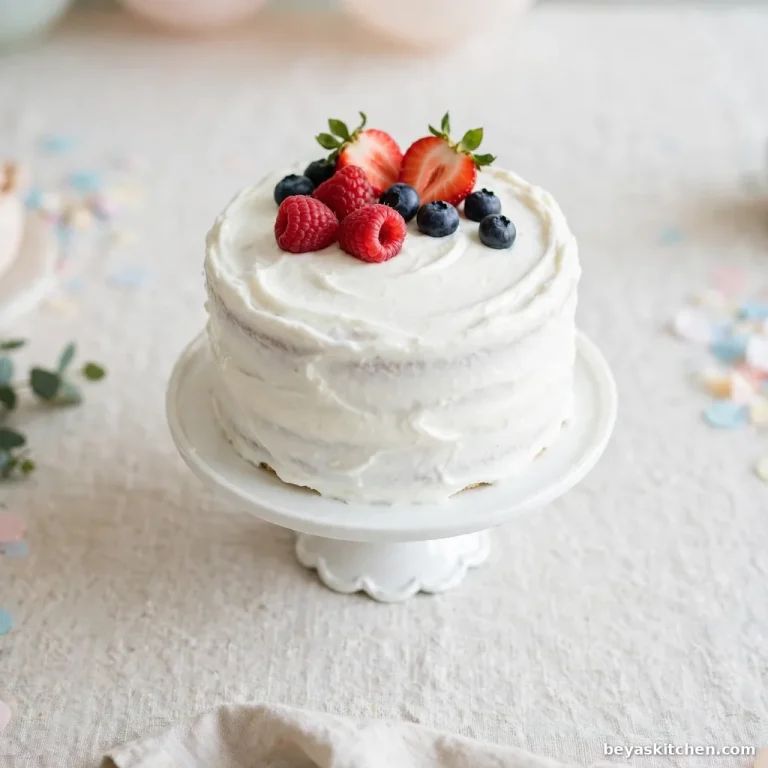
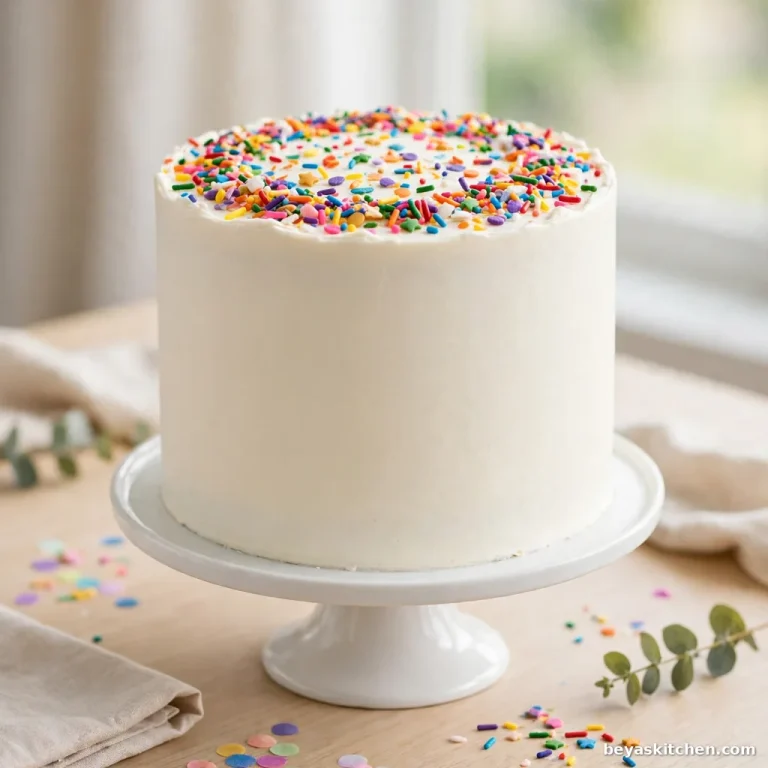
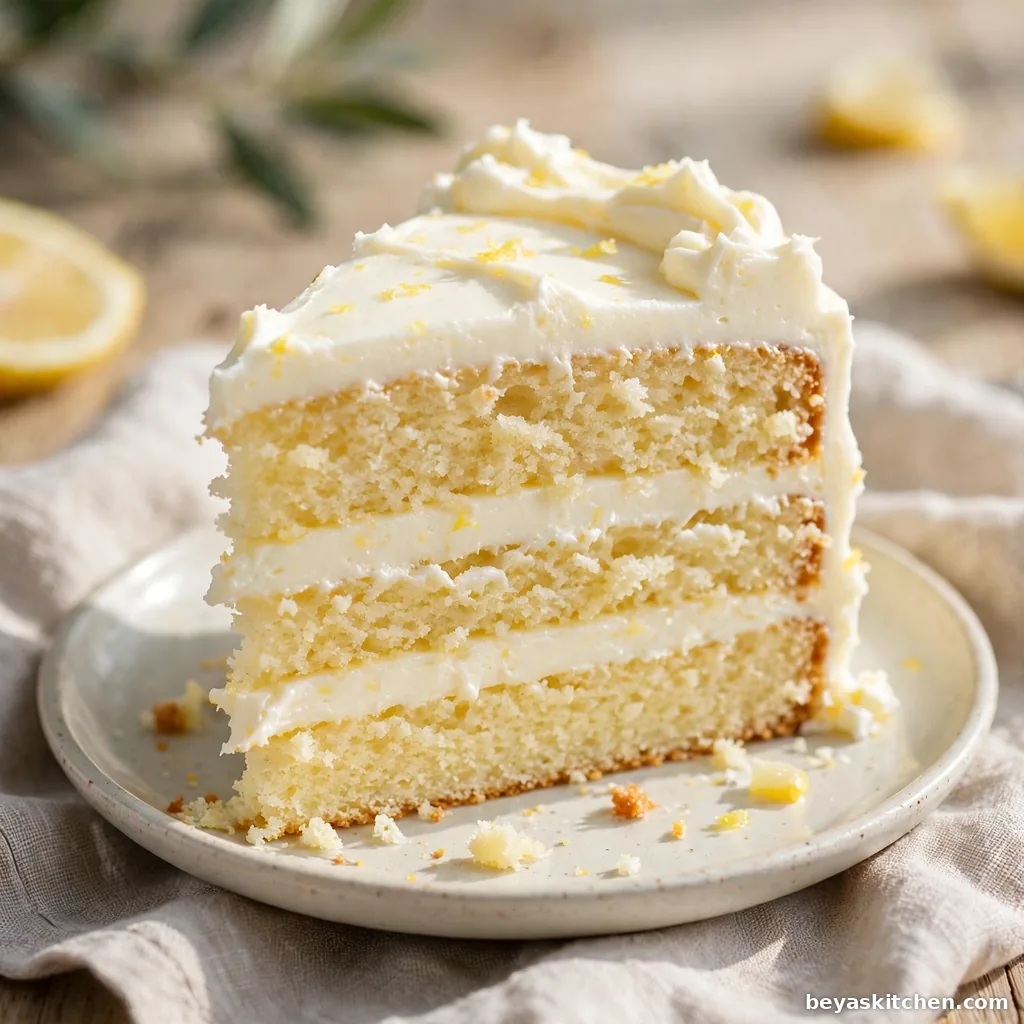
This lemon cake is soft, moist, and full of real lemon taste in every bite. Fresh zest and juice go into the batter, so the flavor is bright and clean, never fake. The crumb stays tender because the butter and sugar are beaten until pale and fluffy first. A smooth lemon buttercream covers the top and sides. From the first bowl to the first slice, you need about 1 hour and 25 minutes.
Why You Will Love This Lemon Cake
- Real lemon in the batter, the syrup, and the frosting, so the taste is bright in every bite
- A soft, tender crumb that stays moist for three full days
- Simple pantry ingredients, with no cake mix needed
- Two even layers that stack neat and cut clean
- Pretty enough for a birthday table, yet easy enough for a weekend bake
Ingredients
For the Cake:
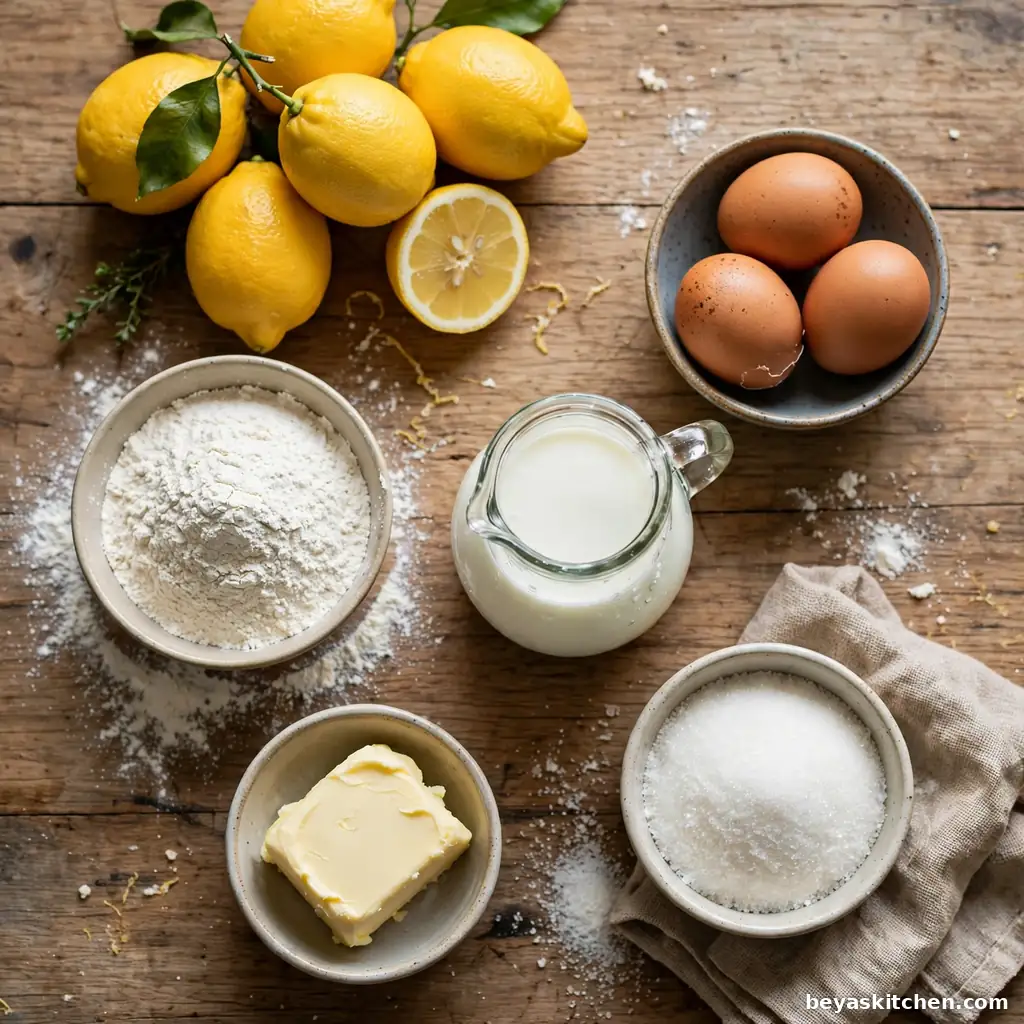
- 2 1/2 cups all purpose flour, King Arthur if you can get it, for a soft crumb that still holds two layers tall (swap with a 1 to 1 gluten free baking flour)
- 2 1/2 teaspoons baking powder (swap with 1/2 teaspoon baking soda plus 1 1/4 teaspoons cream of tartar)
- 1/2 teaspoon Diamond Crystal kosher salt, since the fine flakes blend fast and lift the lemon flavor (use 1/4 teaspoon of fine table salt)
- 1 cup unsalted butter, soft at room temperature (swap with 1 cup plain vegetable oil for a dairy free cake)
- 1 3/4 cups granulated sugar (swap with fine caster sugar in the same amount)
- 4 large eggs, at room temperature (swap with 4 flax eggs, each one made of 1 tablespoon ground flax stirred into 3 tablespoons water)
- 2 tablespoons fresh lemon zest, from about 3 large lemons (swap with 1 tablespoon dried lemon zest soaked in the lemon juice for 10 minutes)
- 1/3 cup fresh lemon juice (swap with bottled lemon juice in the same amount)
- 1 cup whole milk (swap with oat milk or almond milk in the same amount)
- 2 teaspoons pure vanilla extract (swap with 1 teaspoon vanilla plus 1 teaspoon lemon extract for a stronger citrus note)
For the Lemon Syrup:
- 1/4 cup fresh lemon juice
- 1/4 cup granulated sugar
For the Lemon Buttercream:
- 1 cup unsalted butter, soft at room temperature (swap with a firm plant based butter for a dairy free frosting)
- 4 cups powdered sugar, sifted so the frosting stays smooth
- 3 tablespoons fresh lemon juice
- 1 tablespoon fresh lemon zest
- 1 to 2 tablespoons whole milk, added a spoon at a time until the frosting spreads easy
- 1 small pinch of salt, to balance the sweet taste
Rub the Zest Into the Sugar First
Dry zest mixed into flour gives a weak lemon taste. When you rub the zest into the sugar with clean fingers for one full minute, the grains break the zest open and pull out the lemon oils. The sugar turns pale yellow and smells strong, and that flavor melts into every part of the cake.
Allergen and Dietary Disclosure
Contains: gluten, dairy, and eggs.
Gluten Free Option: use a 1 to 1 gluten free baking flour, and let the batter rest for 10 minutes before baking so the flour can drink up the milk and the crumb stays soft.
Dairy Free Option: swap the cake butter with plain vegetable oil, the milk with oat milk, and the frosting butter with a firm plant based butter, all in the same amounts.
Nut Free: the base recipe has no nuts at all. Almond milk is the only nut based swap on the list, so choose oat milk if nuts are a concern in your home.
Egg Free Option: use the 4 flax eggs noted in the ingredient list. The layers rise a little less, but the crumb stays tender.
Disclaimer: Always confirm ingredients with your specific brand labels, as formulations vary by manufacturer.
Step-by-Step Instructions
Step 1: Heat the oven to 350°F (175°C). Grease two 9 inch round cake pans, line the bottoms with baking paper, and dust the sides with a little flour.
Step 2: Put the sugar and the lemon zest in a large bowl. Rub them together with your fingers for one full minute, until the sugar looks pale yellow and smells strong.
Chef’s Note: This rub is the heart of the recipe. The lemon oils live in the zest, not the juice, and the sugar is what sets them free.
Step 3: Add the soft butter to the lemon sugar. Beat with a mixer on medium speed for 3 to 4 minutes, until the mix looks pale, thick, and fluffy.
Step 4: Add the eggs one at a time, beating well after each one. Stir in the vanilla. The mix may look a little curdled, and that is fine.
Step 5: In a second bowl, whisk the flour, baking powder, and salt until the mix looks even, with no dry lumps at the bottom.
Step 6: Add one third of the flour mix to the butter bowl and stir on low speed just until it blends in. Pour in half of the milk and half of the lemon juice and stir again. Repeat with the rest, ending with the flour mix. Stop when the last streak of flour disappears.
Chef’s Note: Adding the dry and wet parts in turns keeps the batter smooth and light. Dumping everything in at once makes a heavy batter and a dense, low cake.
Step 7: Split the batter evenly between the two pans. Smooth the tops with the back of a spoon, and tap each pan once on the counter to pop big air bubbles.
Step 8: Bake for 28 to 32 minutes. The cakes are ready when the tops spring back under a gentle press, the edges pull a little away from the pan, and a toothpick in the center comes out clean. Food safety note: the eggs in the batter must cook all the way through. The center of a finished layer should reach about 200°F (93°C) on a kitchen thermometer.
Step 9: While the cakes bake, make the syrup. Stir the lemon juice and sugar in a small pan over low heat until the sugar melts and the liquid looks clear, about 2 minutes.
Step 10: Let the cakes rest in their pans for 10 minutes. Brush half of the warm syrup over each layer while still warm, so the syrup sinks in deep.
Step 11: Turn the layers out onto a rack and let them cool all the way, about 30 minutes. Warm cake melts buttercream, so do not rush this step.
Chef’s Note: If one layer has a small dome, trim the top flat with a long knife after it cools. Flat layers stack straight and the cake looks neat and tall.
Step 12: Make the buttercream. Beat the soft butter for 2 minutes until smooth and pale. Add the powdered sugar one cup at a time on low speed. Add the lemon juice, zest, salt, and milk a spoon at a time, then beat 2 more minutes, until light and easy to spread.
Step 13: Place the first layer on a plate, flat side up, and spread a thick layer of buttercream on top. Set the second layer on it, then cover the top and sides with the rest. Rest the cake for 20 minutes so the frosting sets, then slice with a clean, dry knife.
Expert Tips and Tricks
- Bring the butter, eggs, and milk out of the fridge 30 minutes early. Room temperature ingredients blend smooth and trap more air, so the layers rise even.
- Weigh the batter between the two pans if you can. Equal batter means equal layers that finish at the same time.
- Use fresh lemons when you can. Fresh zest carries oils that bottled juice does not have.
- Check the date on your baking powder. Open tins older than 6 months give flat, heavy layers, so buy a fresh one.
- Keep the oven door closed for the first 25 minutes. Cool air can sink the soft centers before they set.
- Make ahead tip: bake the layers one day early, wrap them well once cool, and keep them in the fridge. Cold layers are firm and much easier to frost.
- Storage tip: keep the frosted cake in a tall, tight box. The buttercream seals the crumb, and slices stay moist for 3 days in the fridge.
Allergen-Specific Cooking Notes
Gluten free flour gives a slightly softer crumb, so handle the layers with care and add 1 to 2 minutes to the bake time. Oil in place of butter keeps the cake moist for longer, though the flavor turns milder. Flax eggs make a denser bite, so expect a smaller rise.
Storage Instructions
Room Temperature: 1 day under a cake cover, away from sun and stove heat. The buttercream softens in a warm room, so move the cake to the fridge after one day.
Refrigerator: up to 5 days in a tall, sealed box. Let each slice rest on the counter for 20 minutes before you eat it, so the crumb turns soft again.
Freezer: up to 3 months. Wrap single slices in plastic wrap, then place them in a freezer bag with the air pressed out.
Reheating: this cake is served cool or at room temperature, not warm. Thaw frozen slices in the fridge overnight, then rest them on the counter for 20 minutes.
Make-Ahead Notes: the layers can be baked and wrapped one day ahead and kept in the fridge. The buttercream keeps 3 days ahead in the fridge; beat it again for 1 minute before use.
Cold Layers, Warm Syrup, Clean Slices
Three small habits make this cake look like it came from a bakery case. Brush the syrup on while the layers are warm so it sinks in deep. Frost only fully cool layers so the buttercream stays firm. And wipe the knife clean between cuts, because a clean blade gives clean slices with neat edges.
Variations and Substitutions
Lemon Blueberry Cake: fold 1 cup of fresh blueberries, tossed in 1 tablespoon of flour, into the batter before you split it between the pans. The berries add sweet pops of color.
Lemon Poppy Seed Cake: stir 2 tablespoons of poppy seeds into the flour mix. The seeds add a gentle crunch, and the lemon stays the star.
Lemon Sheet Cake: pour all of the batter into one greased 9 by 13 inch pan and bake for 32 to 36 minutes. Spread the buttercream on top only, and cut squares in the pan.
Lemon Coconut Cake: swap half of the milk with coconut milk and press 1 cup of sweet shredded coconut over the frosted top and sides. The coconut adds a soft chew.
Gluten Free Batch: use the 1 to 1 gluten free flour swap and rest the batter for 10 minutes before it goes into the pans. The layers still stack well once cool.
What to Serve With This
Fresh Berries: a small pile of strawberries or raspberries adds color and a tart bite.
Hot Tea: a plain cup of black tea or green tea keeps the plate light and lets the lemon lead.
Vanilla Ice Cream: one small scoop melts into the crumb and cools the bright citrus taste.
Whipped Cream: a soft spoonful on each slice adds a light, airy layer.
Sparkling Water with Lemon: a cold glass with one lemon slice echoes the cake flavor.
Nutrition Information
| Calories per Serving | approximately 480 |
| Protein | 5 g |
| Carbs | 68 g |
| Fat | 22 g |
| Fiber | 1 g |
| Sugar | 48 g |
| Sodium | 260 mg |
| Serving Size | 1 slice |
| Servings per Recipe | 12 |
Disclaimer: Nutrition values are approximate and calculated per serving using standard ingredient amounts. Values may vary based on brands used and portion sizes.
Follow on Pinterest for new updates at Beyaskitchen
Frequently Asked Questions
1. Can I make this lemon cake a day ahead?
Yes, and the flavor gets even better. Bake the layers, brush them with syrup, wrap them well, and keep them in the fridge overnight.
2. Why did my lemon cake turn out dry?
Dry cake usually comes from too much flour or too long in the oven. Spoon flour into the cup and level it off, never scoop from the bag.
3. Can I use bottled lemon juice instead of fresh lemons?
You can swap the juice in the batter with bottled juice in the same amount. The zest is the part you should not skip, because it carries most of the true lemon flavor.
4. How do I know when the cake layers are done baking?
Press the top of one layer gently with a finger. If it springs right back, it is done.
5. Why does my lemon cake taste weak, like the lemon is barely there?
Weak lemon taste almost always means the zest step was rushed or skipped. Rub the zest into the sugar for a full minute until it smells strong.
Conclusion
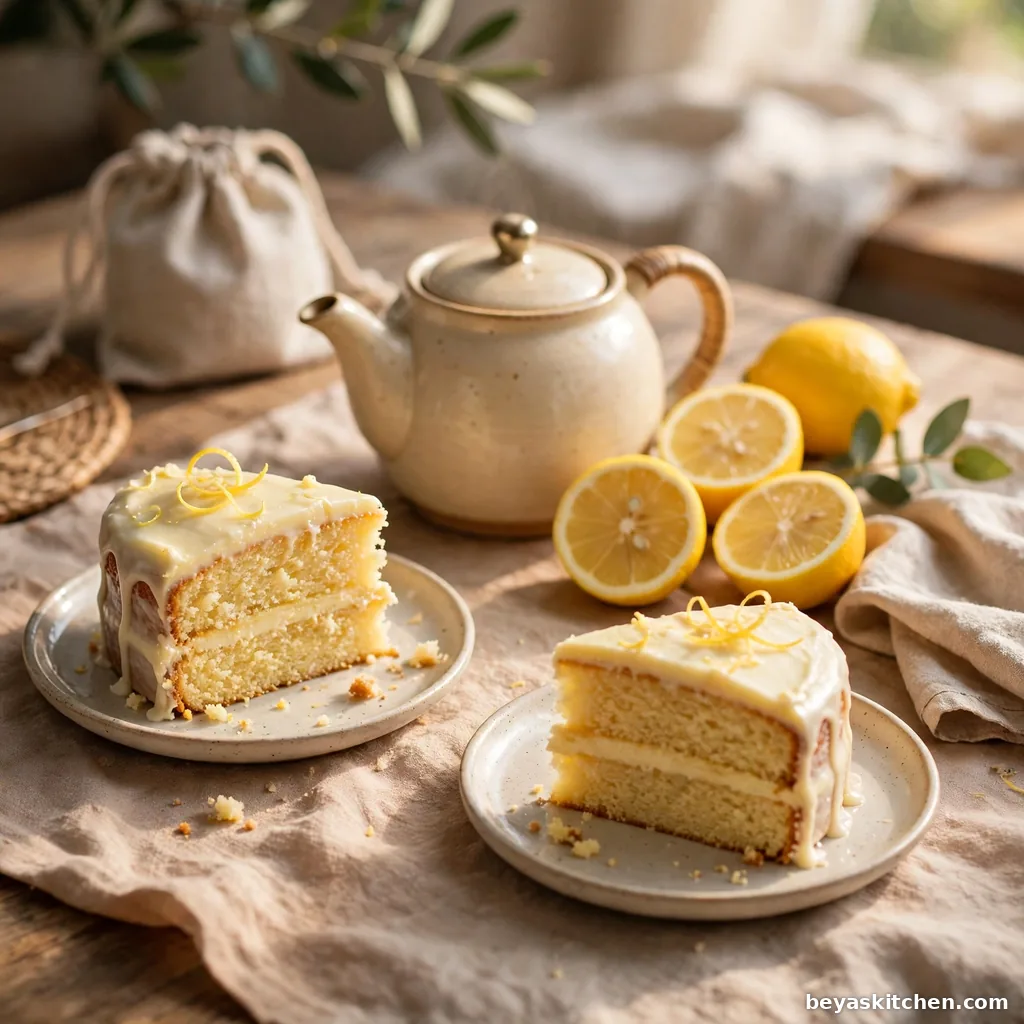
A great lemon cake asks for simple things: fresh zest rubbed into sugar, a light hand with the batter, and syrup brushed on while the layers are warm. Do those three things and the cake handles the rest, from the soft crumb to the last bright bite. If you loved this recipe, save it to your cakes Pinterest board so you can find it easily later.
Get more updates at: beyaskitchen
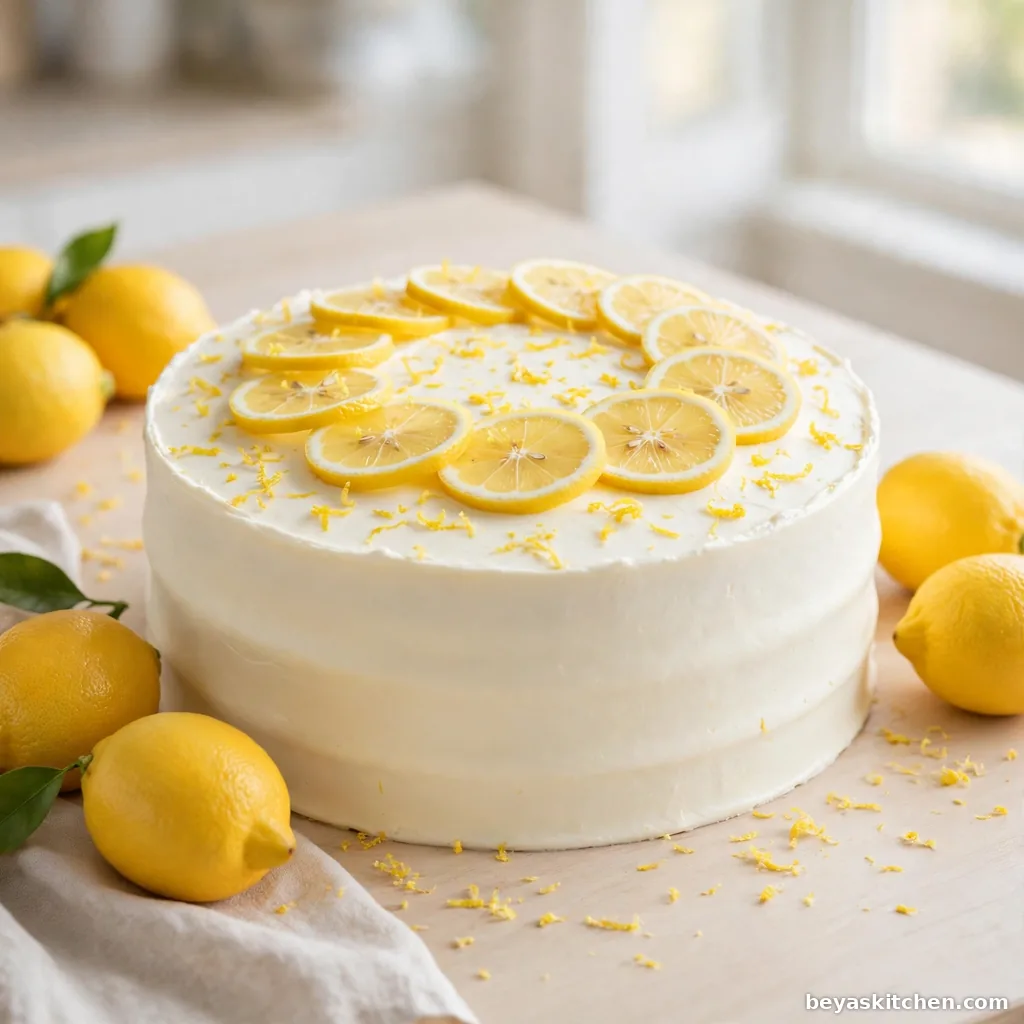
Easy Lemon Cake with Lemon Buttercream
Ingredients
Method
- Heat the oven to 350°F (175°C). Grease two 9 inch round pans, line the bottoms with baking paper, and dust the sides with flour.
- Rub the sugar and lemon zest together with your fingers for 1 minute, until the sugar looks pale yellow and smells strong.
- Add the soft butter and beat for 3 to 4 minutes, until pale, thick, and fluffy.
- Add the eggs one at a time, beating well after each one. Stir in the vanilla.
- Whisk the flour, baking powder, and salt in a second bowl until even.
- Add the flour mix and the milk and lemon juice to the butter bowl in turns, starting and ending with the flour mix. Stir just until the last streak of flour disappears.
- Split the batter evenly between the two pans, smooth the tops, and tap each pan once on the counter.
- Bake 28 to 32 minutes, until the tops spring back and a toothpick in the center comes out clean. The center of a finished layer should reach about 200°F (93°C).
- Stir the syrup juice and sugar in a small pan over low heat until the sugar melts and the liquid looks clear, about 2 minutes.
- Rest the cakes in the pans for 10 minutes, then brush half of the warm syrup over each layer.
- Turn the layers out onto a rack and cool all the way, about 30 minutes.
- Beat the buttercream butter for 2 minutes. Add the powdered sugar one cup at a time, then the lemon juice, zest, salt, and milk. Beat 2 more minutes, until light and easy to spread.
- Stack the layers with buttercream between them, cover the top and sides with the rest, rest the cake for 20 minutes, then slice with a clean, dry knife.