Best Vanilla Cake Recipe with Fluffy Buttercream
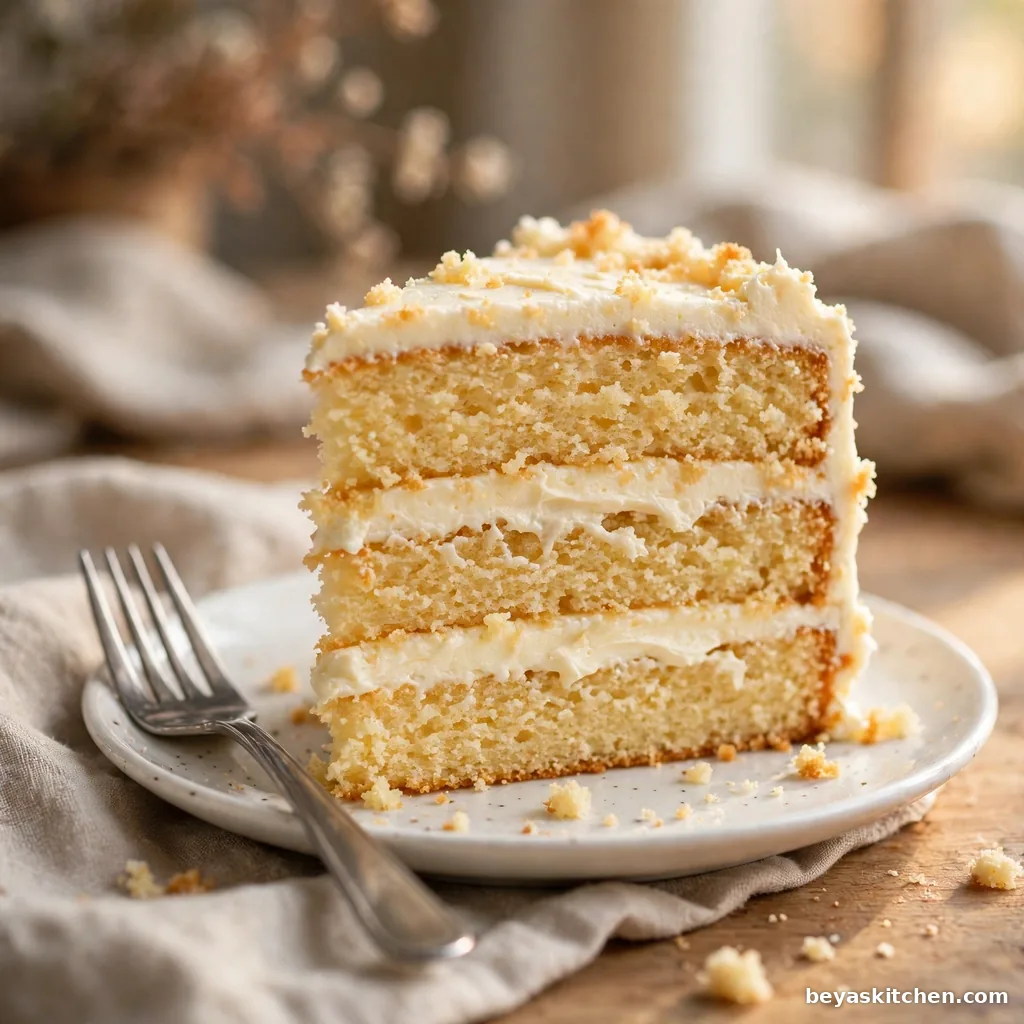
A good vanilla cake recipe lives or dies on one thing: real vanilla taste in every bite. This cake bakes soft and moist, with a fine, golden crumb and a smooth buttercream that carries the same warm flavor. Whole eggs give the layers a rich taste, soft butter keeps them tender, and a full tablespoon of vanilla makes the flavor clear and strong, never faint. The steps stay plain and calm, the items are easy to find, and the finished cake suits birthdays, tea time, and sweet family days at home.
Why You Will Love This Vanilla Cake
- The crumb stays soft and moist for days
- A full tablespoon of real vanilla fills every bite
- Every item is plain and easy to find
- Two neat layers stack with no special tools
- The buttercream needs five items and five minutes
- The layers bake ahead well, so party day stays calm
Ingredients
For the Cake:
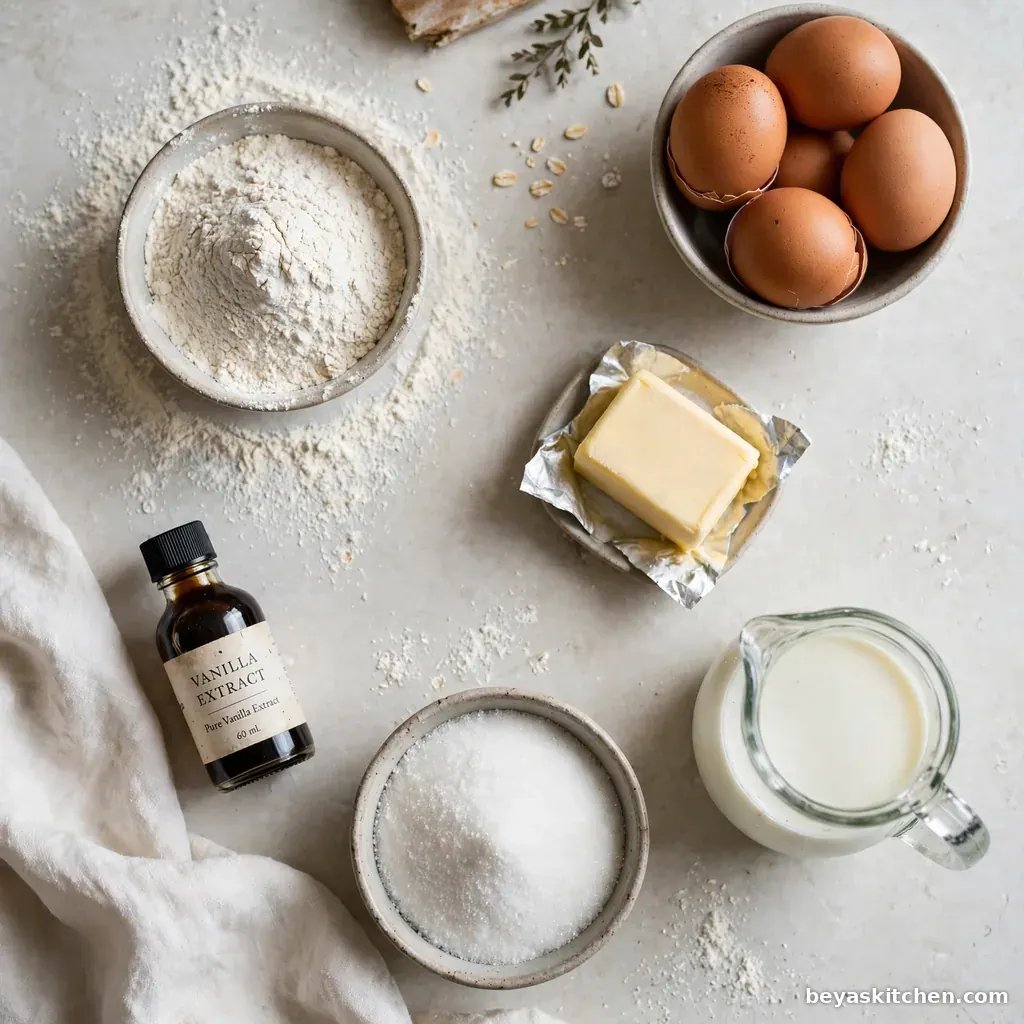
- 2 1/2 cups all purpose flour, spooned into the cup and leveled (swap: cake flour in the same amount gives a slightly finer, softer crumb)
- 2 1/2 teaspoons baking powder (swap: 1 teaspoon baking soda plus 2 teaspoons cream of tartar, with a small change in rise)
- 3/4 teaspoon fine salt
- 3/4 cup unsalted butter, soft at room temperature, plus a little more for the pans (butter only here, since it gives the rich taste this cake needs)
- 1 3/4 cups granulated sugar
- 3 large eggs, at room temperature
- 1 tablespoon alcohol free vanilla extract, the star of this cake, so use the full amount
- 1 cup whole milk, at room temperature (swap: 2 percent milk in the same amount, with a slightly lighter crumb)
For the Vanilla Buttercream:
- 1 cup unsalted butter, soft at room temperature (2 sticks)
- 4 cups powdered sugar, sifted so no lumps stay in the bowl
- 2 teaspoons alcohol free vanilla extract
- 3 to 4 tablespoons whole milk (swap: heavy cream for a richer, softer coat)
- 1/4 teaspoon fine salt, to balance the sweet taste
A Full Tablespoon, Not a Teaspoon
Most cake recipes call for one small teaspoon of vanilla, and the flavor fades in the oven heat. This cake uses a full tablespoon in the batter and more in the frosting, so the vanilla taste stays clear in every slice. It is the one step that turns a plain sweet cake into a true vanilla cake.
Allergen and Dietary Disclosure
Contains: gluten, dairy, and eggs.
Gluten Free Option: swap the all purpose flour with a 1 to 1 gluten free baking flour, and let the mixed batter rest for 10 minutes before it goes into the pans.
Dairy Free Option: use a firm plant butter in the same amount and oat milk in place of whole milk. The crumb stays soft, and the frosting still spreads smooth.
Nut Free: the base recipe has no nuts at all, so no change is needed.
Egg Free Option: swap each egg with a flax egg (1 tablespoon ground flax seed stirred with 3 tablespoons water, rested 10 minutes). The cake will be a bit more dense, but it still bakes and slices well.
Disclaimer: Always confirm ingredients with your specific brand labels, as formulations vary by manufacturer.
Step-by-Step Instructions
Step 1: Heat the oven to 350°F (175°C). Rub soft butter inside two 9 inch round pans, set a circle of baking paper in the bottom of each one, butter the paper, and dust the pans with a thin coat of flour.
Step 2: Whisk the flour, baking powder, and salt in a medium bowl until the mix looks even and light. Set the bowl aside.
Step 3: Beat the butter and sugar in a large bowl for 3 to 4 minutes, until the mix turns pale, thick, and fluffy, like soft whipped cream.
Chef’s Note: This beating step pushes tiny pockets of air into the butter. Those pockets grow in the oven heat and give the cake its light, tender crumb.
Step 4: Add the eggs one at a time, beating well after each one so the mix stays smooth. Stir in the vanilla. Food safety note: raw batter holds raw egg, so do not taste it before the cake is baked.
Chef’s Note: Warm eggs blend into the butter with ease. Cold eggs can split the mix into lumps, so set the eggs in a bowl of warm water for 10 minutes if they come straight from the fridge.
Step 5: Add the flour mix in three parts and the milk in two parts, taking turns, and start and end with the flour. Mix on low speed just until no dry streaks show.
Chef’s Note: Stop the mixer the moment the batter looks smooth. Extra mixing builds strength in the flour and turns a soft cake tough and heavy.
Step 6: Split the batter evenly between the two pans, about 2 1/2 cups in each. Smooth the tops with the back of a spoon, then tap each pan once on the counter to pop big air bubbles.
Step 7: Bake for 30 to 35 minutes. The cake is ready when the top springs back under a soft finger press, the edges pull a little from the pan sides, and a toothpick pushed in the center comes out clean.
Step 8: Rest the pans on a rack for 10 minutes. Run a thin knife around the edges, turn the layers out onto the rack, peel off the paper, and let them cool fully, about 1 hour.
Step 9: While the layers cool, beat the frosting butter until it looks pale and smooth. Add the powdered sugar one cup at a time with the milk, then the vanilla and salt. Beat for 2 to 3 minutes, until the frosting turns light and fluffy.
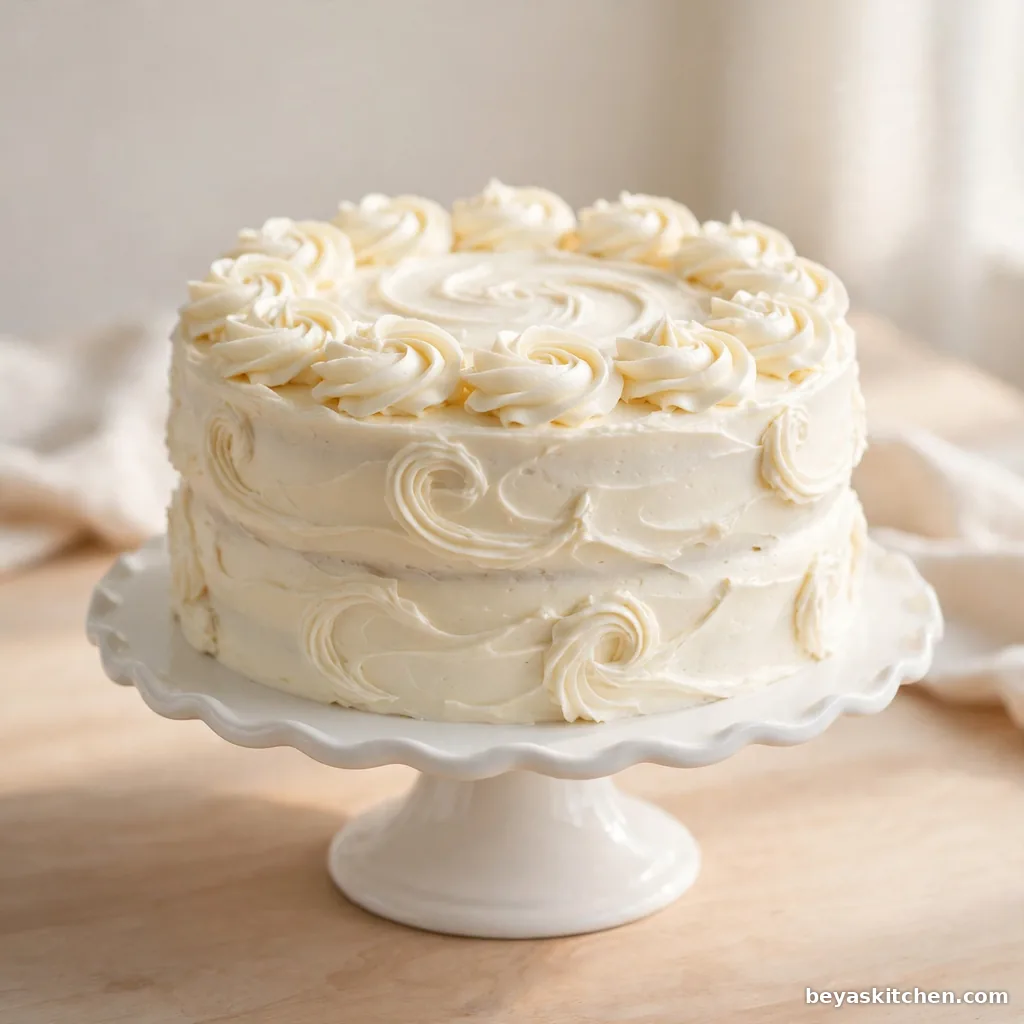
Step 10: Set one layer on a plate and spread about 1 cup of frosting over the top. Lay the second layer on top, flat side up. Spread a thin coat over the whole cake, chill it for 15 minutes, then add the rest of the frosting in soft swirls.
Expert Tips and Tricks
- Spoon the flour into the cup with care. A packed cup adds too much flour and gives you a dry, firm crumb.
- Weigh the batter or use the same cup for both pans, so the two layers bake in the same time and stand level.
- Turn the pans around once, halfway through the bake, if your oven browns one side faster than the other.
- Level a domed layer with a long knife before you stack, so the cake stands straight and slices clean.
- Make ahead tip: bake the layers one day early, wrap them tight once cool, and keep them in the fridge. Cold layers are firm and much easier to frost.
- Storage tip: keep frosted leftovers in the fridge for up to 4 days, and let each slice sit out for 20 minutes before you serve it, so the crumb softens again.
Allergen-Specific Cooking Notes
Gluten free flour makes the layers a touch more delicate, so cool them in the pans for the full 10 minutes and lift them with care. Plant butter frosts best when it is cool but soft; if it turns shiny and loose, chill the bowl for 10 minutes and beat it again.
Storage Instructions
Room Temperature: the frosted cake keeps for up to 1 day under a cake cover in a cool room. In a warm kitchen, move it to the fridge the same day.
Refrigerator: up to 5 days in a covered box or under a cake dome. The frosting firms up in the cold, which makes clean slices simple.
Freezer: whole or sliced, up to 2 months. Wrap slices in plastic wrap, then in foil, and thaw them in the fridge overnight.
Reheating: this cake is served cool or at room temperature, so no reheating is needed. Just rest slices on the counter for 20 minutes.
Make-Ahead Notes: unfrosted layers keep 1 day in the fridge or 2 months in the freezer, wrapped tight. The frosting can be made 3 days early and beaten again for 1 minute before you spread it.
Warm Layers Melt the Frosting
Buttercream starts to melt the moment it touches a warm cake. If the layers still feel warm, the coat will slide, soak in, and turn thin and shiny. Wait until the layers feel fully cool to the touch, about 1 hour on a rack, and the frosting will sit thick and neat.
Variations and Substitutions
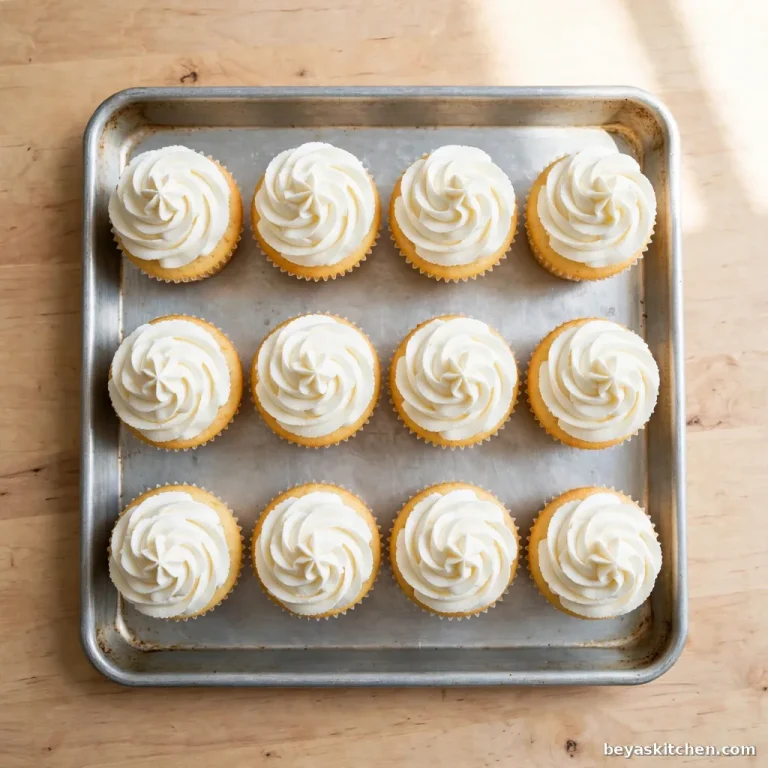
Vanilla Cupcakes: fill 24 lined cupcake cups two thirds full with the same batter and bake for 18 to 20 minutes. Frost each one with a soft swirl once cool.
Chocolate Frosting Swap: beat 1/2 cup of cocoa powder into the buttercream with the first cup of sugar. The cake keeps its vanilla heart, with a deep chocolate coat.
Berry Vanilla Cake: spread 1/2 cup of seedless raspberry jam over the bottom layer and set a ring of fresh berries on each plate at serving time.
Vanilla Sheet Cake: pour the batter into a buttered 9 by 13 inch pan and bake for 35 to 40 minutes. Frost the top only, and cut the cake in the pan.
Sprinkle Party Cake: fold 1/3 cup of rainbow sprinkles into the batter at the very end, and add more on top of the frosting for a bright birthday look.
What to Serve With This
Fresh Strawberries: bright berries on the side add color and a soft tart taste next to the sweet crumb.
Vanilla Ice Cream: one cold scoop turns a plain slice into a full dessert for guests.
Warm Berry Sauce: spoon cooked berries with a little sugar over each slice for a warm and cool mix.
Hot Tea: a simple cup of black or mint tea cuts the sweet edge and suits an afternoon slice well.
Cold Milk: a plain glass keeps young eaters happy and fits the mild taste of this cake.
Nutrition Information
| Calories per Serving | approximately 540 |
| Protein | 5 g |
| Carbs | 74 g |
| Fat | 25 g |
| Fiber | 1 g |
| Sugar | 56 g |
| Sodium | 330 mg |
| Serving Size | 1 slice, one twelfth of the cake |
| Servings per Recipe | 12 |
Disclaimer: Nutrition values are approximate and calculated per serving using standard ingredient amounts. Values may vary based on brands used and portion sizes.
Follow on Pinterest for new updates at Beyaskitchen
Frequently Asked Questions
1. Why did my vanilla cake come out dense and heavy?
Too much mixing is the top cause. Once the flour goes in, long mixing builds strength and the crumb turns tight and firm.
2. How can I get a stronger vanilla taste in my cake?
Use the full tablespoon of alcohol free vanilla extract in the batter, and add the full amount to the frosting too. A small amount gets lost in the oven heat.
3. How do I know when the vanilla cake is done baking?
Look for three signs together. The top springs back when you press it, and a toothpick in the center comes out clean.
4. Can I make this vanilla cake ahead of time?
Yes, and it often works better that way. Bake the layers, cool them fully, wrap them tight, and keep them in the fridge for 1 day.
5. Can I swap the butter with oil in this recipe?
You can, but the cake will change. Oil makes the crumb moist, yet it takes away the rich butter taste that carries the vanilla.
Conclusion
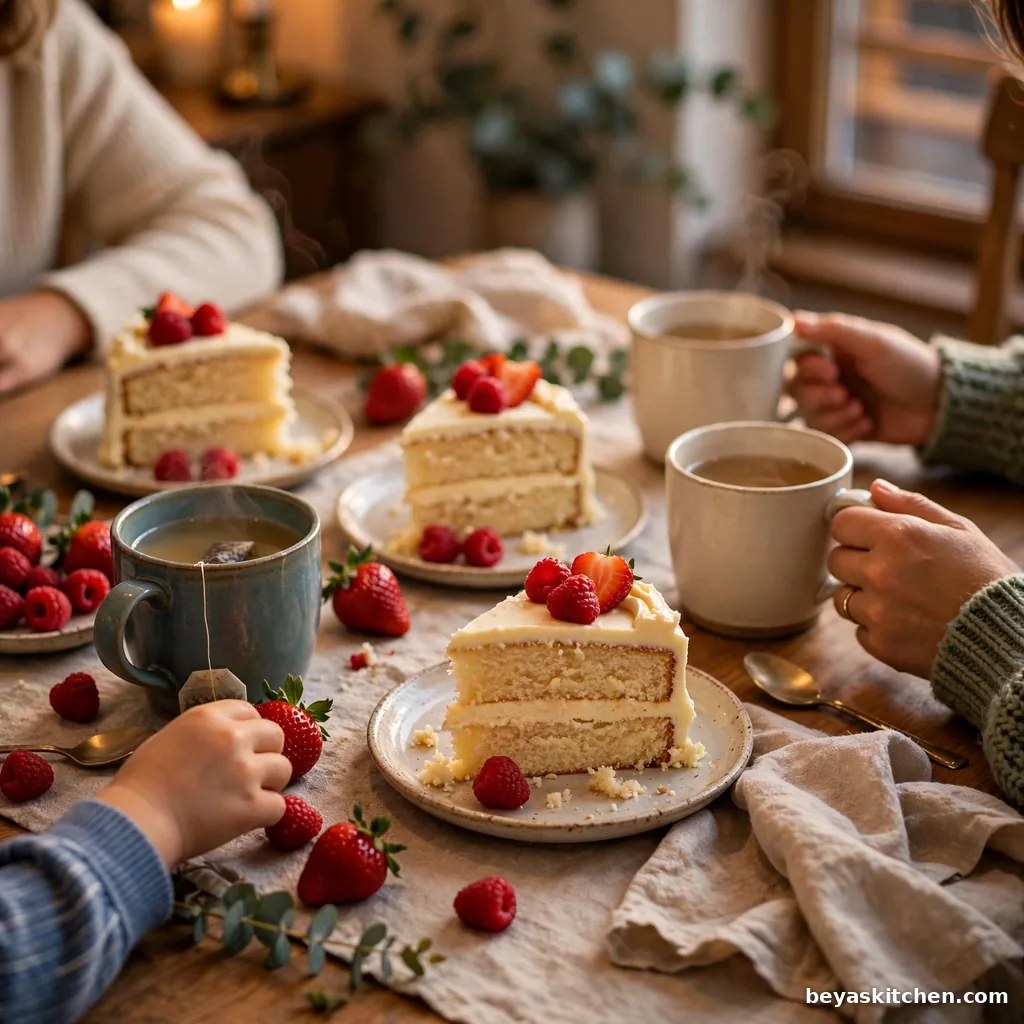
A great vanilla cake comes down to a few calm habits: soft butter beaten well with sugar, warm eggs, a full tablespoon of real vanilla, and a gentle hand once the flour goes in. Get those right and the layers bake moist, golden, and full of flavor, ready for a thick coat of buttercream. Bake this vanilla cake recipe once for a family party, and it will earn a steady place in your home. If you loved this recipe, save it to your vanilla cakes Pinterest board so you can find it easily later!
Get more updates at: beyaskitchen
Best Vanilla Cake with Fluffy Buttercream
Ingredients
Method
- Heat the oven to 350°F (175°C). Butter two 9 inch round pans, line the bottoms with baking paper, butter the paper, and dust with flour.
- Whisk the flour, baking powder, and salt in a bowl.
- Beat the butter and sugar for 3 to 4 minutes, until pale, thick, and fluffy.
- Add the eggs one at a time, beating well after each one. Stir in the vanilla.
- Add the flour mix in three parts and the milk in two parts, taking turns, starting and ending with flour. Mix on low just until smooth.
- Split the batter evenly between the pans, smooth the tops, and tap each pan once on the counter.
- Bake 30 to 35 minutes, until the top springs back and a toothpick in the center comes out clean.
- Rest the pans 10 minutes, turn the layers out onto a rack, peel off the paper, and cool fully, about 1 hour.
- Beat the frosting butter until pale and smooth. Add the powdered sugar one cup at a time with the milk, then the vanilla and salt. Beat 2 to 3 minutes, until light and fluffy.
- Spread 1 cup of frosting on the first layer, add the second layer flat side up, chill a thin coat for 15 minutes, then finish with the rest of the frosting in soft swirls.
Notes
- Use the full tablespoon of alcohol free vanilla in the batter. A small teaspoon fades in the oven heat.
- Stop mixing the moment the batter looks smooth, or the cake turns tough.
- Cool the layers fully before you frost them, or the buttercream will melt and slide.