The Best Chicken Parmesan Recipe, Crispy and Cheesy
A good chicken parmesan recipe gives you three things in one bite: a crisp golden crust, juicy chicken, and warm cheese over rich tomato sauce. This version keeps every part simple. The chicken fries first for a firm crust, then bakes under sauce and cheese until it bubbles. No wine, no hard steps, and no dry meat at the end.
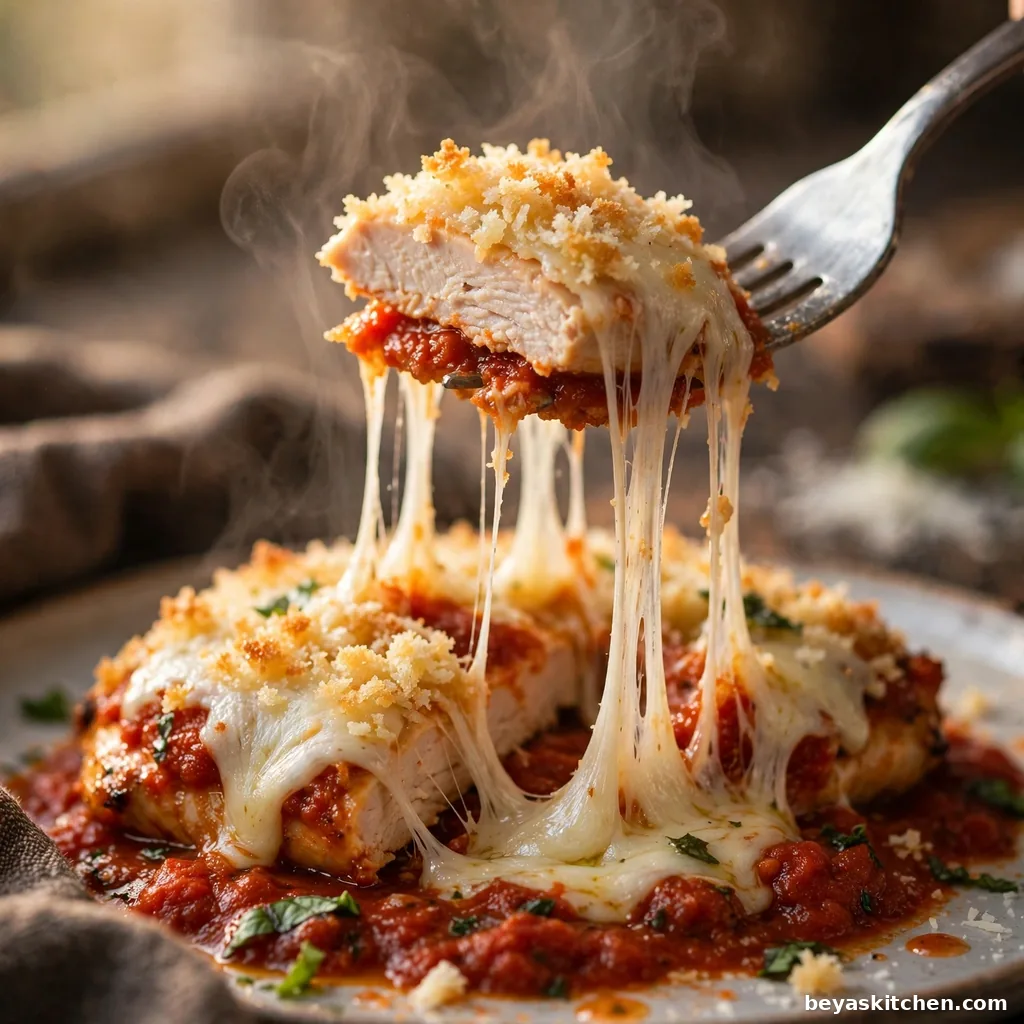
The main trick is even chicken. Pound each breast to the same thickness, and every piece cooks at the same speed. The thin edges never dry out, and the thick center never stays raw. A food thermometer takes away all the guessing at the end.
Sauce placement matters just as much. Spoon the sauce over the center of each piece and leave the edges bare. The edges stay crisp in the oven, while the middle turns soft and cheesy. You get both textures in every single bite.
Why You Will Love This Chicken Parmesan
- Crisp edges and a cheesy center, two textures in every bite
- On the table in 45 minutes, fast enough for a busy weeknight
- Pantry staples only, with no wine and no special shopping trip
- One clear doneness cue, so the chicken stays juicy and safe
- Leftovers reheat in the oven and keep most of their crunch
Ingredients
For the Chicken:
- 4 boneless, skinless halal chicken breasts, about 1 1/2 pounds total, pounded to an even 1/2 inch thick (swap with boneless, skinless halal chicken thighs)
- 1 teaspoon Diamond Crystal kosher salt (the wide flakes coat the meat in an even layer; use 3/4 teaspoon for fine table salt)
- 1/2 teaspoon black pepper, freshly ground
- 1 teaspoon garlic powder (swap with 2 fresh garlic cloves, grated fine)
- 1 teaspoon Italian seasoning (swap with 1/2 teaspoon dried oregano plus 1/2 teaspoon dried basil)
For the Breading:
- 1/2 cup King Arthur all purpose flour (the steady protein level helps the coating set in a firm, even layer)
- 2 large eggs, beaten with 1 tablespoon water
- 1 cup Italian style panko bread crumbs (swap with plain panko plus 1 teaspoon Italian seasoning)
- 1/2 cup finely grated Parmesan cheese
- 3 tablespoons olive oil, for frying (swap with avocado oil)
For the Sauce and Topping:
- 2 cups marinara sauce, store bought or homemade, with no wine on the label (swap with crushed tomatoes simmered 10 minutes with garlic and salt)
- 1 1/2 cups shredded low moisture mozzarella cheese, about 6 ounces (swap with sliced fresh mozzarella, patted very dry)
- 1/4 cup grated Parmesan cheese, plus more at the table
- 8 fresh basil leaves, for serving (swap with 2 tablespoons chopped fresh parsley)
- Cooked spaghetti, for serving, if you like (not counted in the nutrition below)
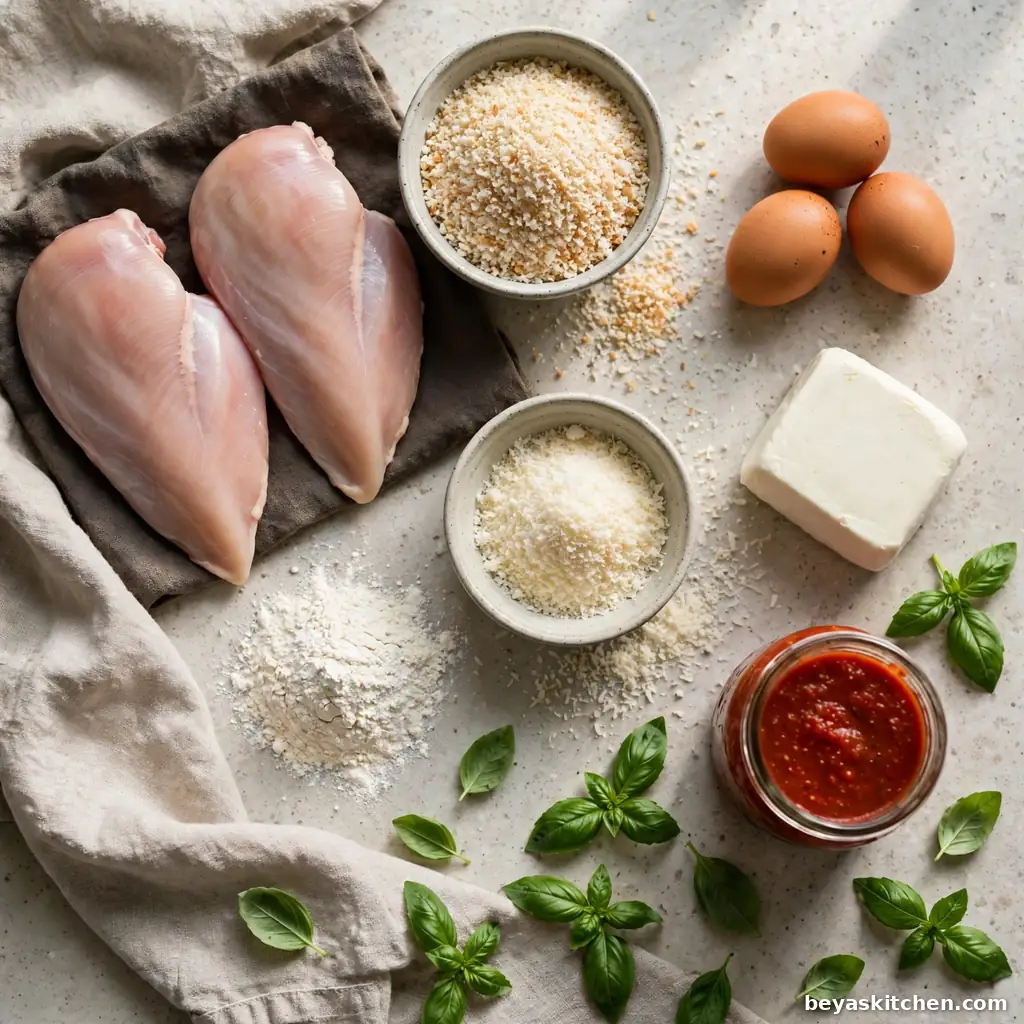
Even Thickness, Even Cooking
A chicken breast is thick at one end and thin at the other, so it can never cook evenly as it is. Two minutes with a mallet fixes that for good. Every piece comes out juicy at the same moment, and no one at the table gets stuck with the dry end.
Allergen and Dietary Disclosure
Contains: Gluten (wheat, from the flour and bread crumbs), dairy (milk, from the Parmesan and mozzarella), and egg (in the breading wash).
Gluten-Free Option: Use a gluten free all purpose flour blend and certified gluten free panko in the same amounts.
Dairy-Free Option: Swap both cheeses for dairy free shreds that melt, and give the top 1 minute under the broiler at the end for color.
Nut-Free: The base recipe has no nuts and no nut oils. Check bread crumb labels if nut allergies are strong.
Egg-Free Option: Swap the beaten egg for 1/4 cup plain milk or buttermilk. The crumbs hold a little looser, so press them on with extra care.
Disclaimer: Always confirm ingredients with your specific brand labels, as formulations vary by manufacturer.
Step by Step Instructions
Step 1: Heat the oven to 425 degrees F. Place each chicken breast between two sheets of plastic wrap and pound the thick end until the whole piece is an even 1/2 inch thick. Pat the meat dry, then season both sides with the salt, pepper, garlic powder, and Italian seasoning.
Step 2: Set out three shallow dishes in a row. Put the flour in the first, the beaten eggs in the second, and the panko mixed with the grated Parmesan in the third. A tidy line next to the stove makes the breading fast and calm.
Chef’s Note: Use one hand for the dry dishes and the other hand for the egg. This small habit keeps your fingers clean and stops the crumbs from clumping on your skin instead of the chicken.
Step 3: Coat one breast at a time. Press it into the flour and shake off the extra, dip it fully in the egg, then press it hard into the crumb mix on both sides. Set each finished piece on a clean plate. The coating should look dry and even, with no bare spots.
Step 4: Heat the olive oil in a large oven safe skillet over medium high heat until it shimmers. Lay in two breasts and fry for 4 to 5 minutes per side, until the crust turns deep golden and feels firm under your tongs. Move them to a plate and fry the last two the same way. The chicken is not fully cooked yet. It finishes in the oven in the next steps.
Chef’s Note: Fry in two batches, never four at once. Crowded pieces drop the oil heat and steam in their own juice, and steamed crumbs go soft. Space in the pan is what buys you a crisp crust.
Step 5: Spread 1 cup of the marinara sauce in a thin layer over the bottom of a 9 by 13 inch baking dish. Lay the fried chicken on top in one layer, with a little space between the pieces. Each piece should sit on the sauce, not swim in it.
Step 6: Spoon the rest of the sauce over the center of each breast, about 2 tablespoons per piece, and leave the outer edges of the crust bare and dry. Cover the center of each piece with mozzarella, then shower the grated Parmesan over the top.
Chef’s Note: Sauce and cheese belong in the center only. The bare edges stay crisp in the oven heat, and that mix of crunch and soft cheese is the whole charm of this dish.
Step 7: Bake for 13 to 15 minutes. The cheese should melt fully, bubble at the edges, and show a few golden spots on top. Check the thickest piece with a food thermometer. The center must reach 165 degrees F before serving.
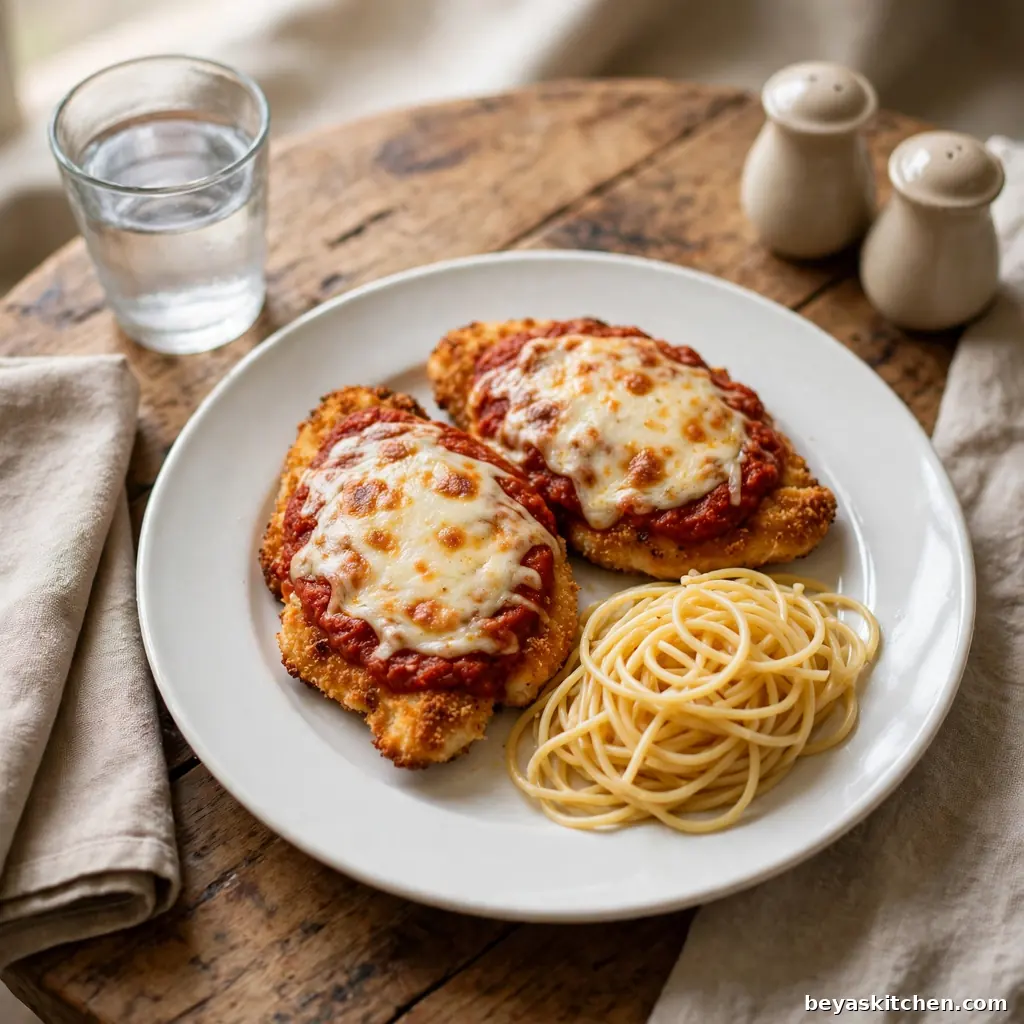
Step 8: Rest the dish for 5 minutes on the counter. The cheese will settle, and the juices will stay inside the meat when you cut it. Scatter the basil leaves over the top and serve at once, with hot spaghetti under or beside each piece if you like.
Expert Tips and Tricks
- Pound the chicken the night before and keep it covered in the fridge, so dinner starts one step ahead
- Shred mozzarella from a cold block at home; bagged shreds carry starch that slows the melt
- Rest fried pieces on a wire rack, not a plate, so the bottom crust stays dry
- Make a double batch of sauce on the weekend and freeze half for up to 2 months for a faster second round
- Store leftovers in the fridge for up to 3 days, in one layer, so the crust never sits in sauce
- Warm leftover pieces in a dry skillet for 2 minutes per side when you want the crust at its very best
Block Cheese Melts Better
Cheese you shred yourself melts smooth and stretchy. Bagged shreds are dusted with starch to stop clumps in the bag, and that same starch can leave the top looking dull and grainy. One cold block and a box grater fix it in two minutes.
Allergen Specific Cooking Notes
Gluten free panko is thinner than wheat panko, so press the coating on twice for a full, even layer. Dairy free shreds melt slower and stay pale; give them the last minute under a hot broiler and watch them closely. Egg free breading with milk holds best if the coated chicken rests for 10 minutes before it meets the hot oil.
Storage Instructions
Room Temperature: Not recommended. Move leftovers to the fridge within 2 hours of serving.
Refrigerator: Up to 3 days, in a sealed container, in one layer when you can.
Freezer: Up to 2 months. Freeze the baked pieces on a tray first, then store them in a freezer bag with the air pressed out.
Reheating: Bake on a rack over a tray at 400 degrees F for 12 to 15 minutes, until the cheese bubbles and the center is hot.
Make-Ahead Notes: Bread the chicken up to 4 hours ahead and keep it covered in the fridge. The sauce keeps 4 days in the fridge or 2 months in the freezer.
Variations and Substitutions
Spicy Chicken Parmesan: Add 1/2 teaspoon red pepper flakes to the crumb mix and a small pinch to the sauce. The heat sits in the crust, so each bite warms up slowly.
Kid Friendly Chicken Strips: Cut the breasts into wide strips before you bread them. Small pieces cook faster, cool faster, and fit small hands with no knife work at the table.
Vegetarian Eggplant Parmesan: Swap the chicken for thick eggplant rounds, salted for 20 minutes and patted dry. Bread and fry them the same way, then bake until the centers feel soft when poked.
Gluten Free Chicken Parmesan: Use the flour and panko swaps from the allergen section above. Fry in a clean pan, so no wheat crumbs from an earlier batch can sneak in.
Lighter Baked Only Version: Skip the frying. Set the breaded chicken on an oiled rack over a tray, spray the tops with oil, and bake at 425 degrees F for 18 to 20 minutes before the sauce and cheese go on.
What to Serve With This
Spaghetti With Extra Sauce: The classic partner. Plain pasta catches the extra sauce and melted cheese that slide off each piece.
Garlic Green Beans: Beans cooked fast in a hot pan with garlic bring a fresh, firm bite next to the rich cheese.
Simple Green Salad: Crisp leaves with lemon and olive oil cut through the richness and clear your palate between bites.
Warm Garlic Bread: Soft bread with a crisp rim is built for wiping the last of the sauce from the plate.
Nutrition Information
| Calories per Serving | approximately 580 |
| Protein | 48g |
| Carbs | 34g |
| Fat | 26g |
| Fiber | 3g |
| Sugar | 6g |
| Sodium | 940mg |
| Serving Size | 1 chicken breast with sauce and cheese, no pasta |
| Servings per Recipe | 4 |
Each serving carries a full chicken breast, so the protein count is high. Most of the carbs come from the crumb coat, and most of the fat comes from the cheese and the frying oil. A green salad on the side keeps the plate lighter with no loss of flavor.
Disclaimer: Nutrition values are approximate and calculated per serving using standard ingredient amounts. Values may vary based on brands used and portion sizes.
Follow on Pinterest for new updates at Beyaskitchen
Frequently Asked Questions
1. Can I make chicken parmesan ahead of time?
Yes, in parts. Bread the chicken up to 4 hours early and keep it covered in the fridge, and the sauce keeps for 4 days. Fry and bake close to dinner, though, because the crust is at its best in the first hour. A fully baked chicken parmesan recipe also reheats well at 400 degrees F for 12 to 15 minutes.
2. Why does my breading turn soggy or fall off the chicken?
Wet chicken is the usual cause. If the meat goes into the flour damp, the coating turns to paste and slides off in the pan. Pat each piece dry, press the crumbs on hard, and rest the fried crust on a rack. Sauce poured over the whole top too early can soften this chicken parmesan recipe fast, so keep the sauce in the center.
3. Can I use chicken thighs instead of chicken breasts?
Yes. Boneless, skinless halal chicken thighs work very well and stay extra juicy. Pound them gently to an even thickness, just like breasts, and add 2 to 3 minutes to the baking time. Check the thickest part with a thermometer, because dark meat hides its color. The taste is a little richer, and many cooks end up liking it more.
4. How do I know when chicken parmesan is done?
Trust the thermometer, not the clock. Push it into the thickest part of the largest piece; it must read 165 degrees F. The cheese should be fully melted with light golden spots, and the juices should run clear when you cut the center. If the cheese browns before the meat is ready, lay a loose sheet of foil over the dish for the last few minutes.
5. Why does the cheese slide off my chicken parmesan in one sheet?
That sheet forms when the sauce is too wet and the cheese goes on in one thick slab. Pat fresh mozzarella very dry, or use low moisture mozzarella, and spread the shreds in a loose, even layer instead of a pile. Rest the baked dish for 5 minutes before you cut it. The cheese grips the sauce as it cools a little, and each piece of chicken parmesan stays nicely dressed.
Conclusion
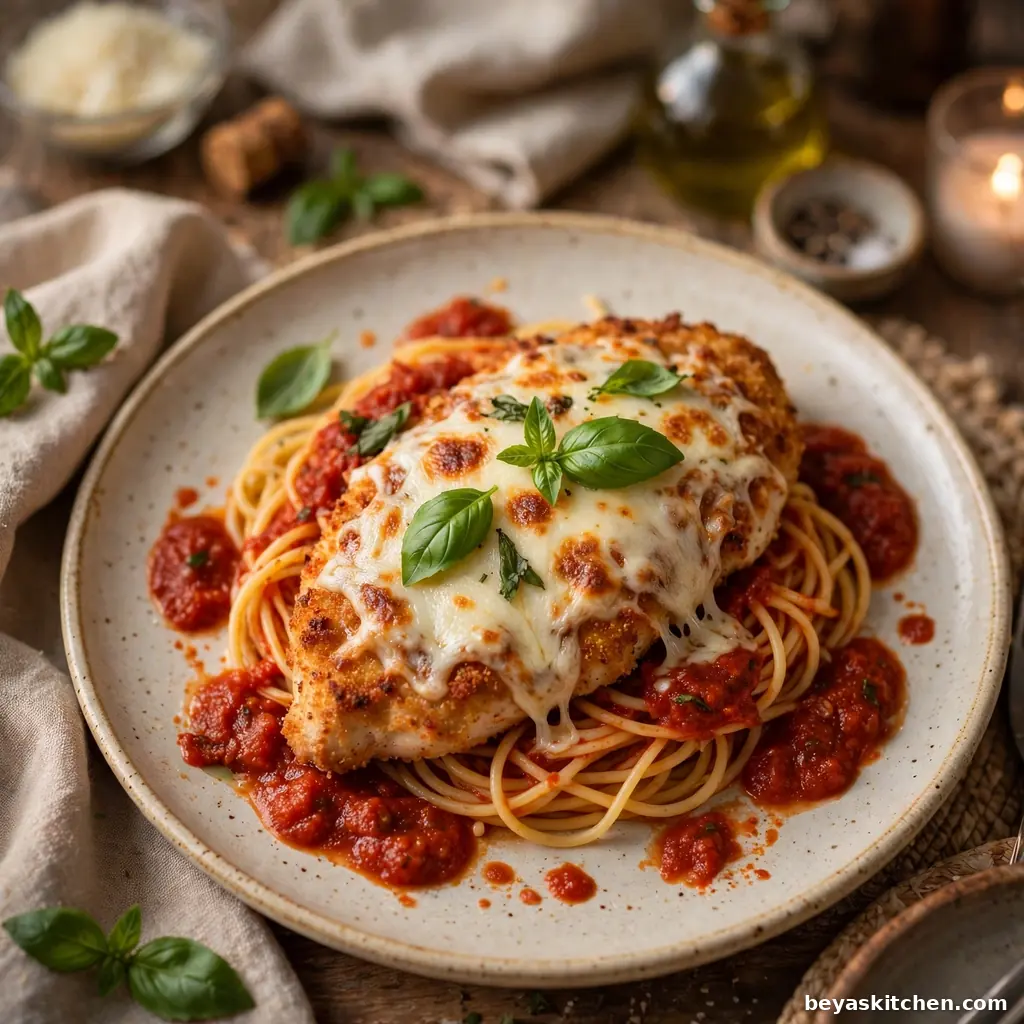
If you keep two ideas from this page, keep these: even chicken and a dry, well pressed crust. Those two small habits turn a plain breaded breast into the chicken parmesan recipe your table asks for again. The sauce stays in the center, the edges stay crisp, and the thermometer ends all doubt. Serve it over spaghetti, or keep the plate light with salad and green beans. Either way, a plain weeknight starts to feel like a small event. If you loved this recipe, save it to your chicken dinner Pinterest board so you can find it easily later!
Get more updates at: beyaskitchen
Ingredients
Equipment
Method
- Heat the oven to 425 degrees F, pound the chicken to an even 1/2 inch, pat it dry, and season both sides with the salt, pepper, garlic powder, and Italian seasoning.
- Set out the flour, the beaten eggs, and the panko mixed with the Parmesan in three shallow dishes, in that order.
- Coat each breast in flour, then egg, then the crumb mix, pressing hard on both sides until the coat looks dry and even.
- Fry in hot olive oil in two batches, 4 to 5 minutes per side, until the crust is deep golden and firm.
- Spread 1 cup of the sauce in a 9 by 13 inch baking dish and lay the chicken on top in one layer.
- Spoon the rest of the sauce over the centers only, then cover the centers with mozzarella and Parmesan.
- Bake 13 to 15 minutes, until the cheese bubbles with golden spots and the thickest piece reads 165 degrees F.
- Rest 5 minutes, scatter the basil leaves on top, and serve hot, with spaghetti if you like.